Every season, CAS becomes the hot topic again. It is the future. It is how you grow. It is where the value-added revenue is. That is the pitch you hear at conferences and read in every vendor email.
Now ask a firm to define CAS. The answer comes fast: client advisory services. That is a name, not a definition.
Ask the harder question. How is your firm actually getting it done? That is where the answers get thin. A blank stare. Someone in the office handles that. Silence.
What did seven CPAs agree on?
At a round table on CAS this summer, that silence lasted a full few minutes. Then one CPA said the thing everyone was thinking. Before any of this, the books need to be closed.
Every head at the table nodded. Seven CPAs, from different regions, running firms anywhere from two people to a few hundred, all landed in the same place. Close the books first. Only then can you advise.
Isn’t closing the books the easy part?
That should be the simple bit. It is the work everyone says AI is about to take off our plates.
So why isn’t it happening? The reasons came quickly. The client did not send the data. The bookkeeper does not do it the way we want it done. We are not sure where AI fits. There are so many other things that have to get done first.
Every one of those reasons is real. But “close the books first” still has it backwards.
What do you actually want to do?
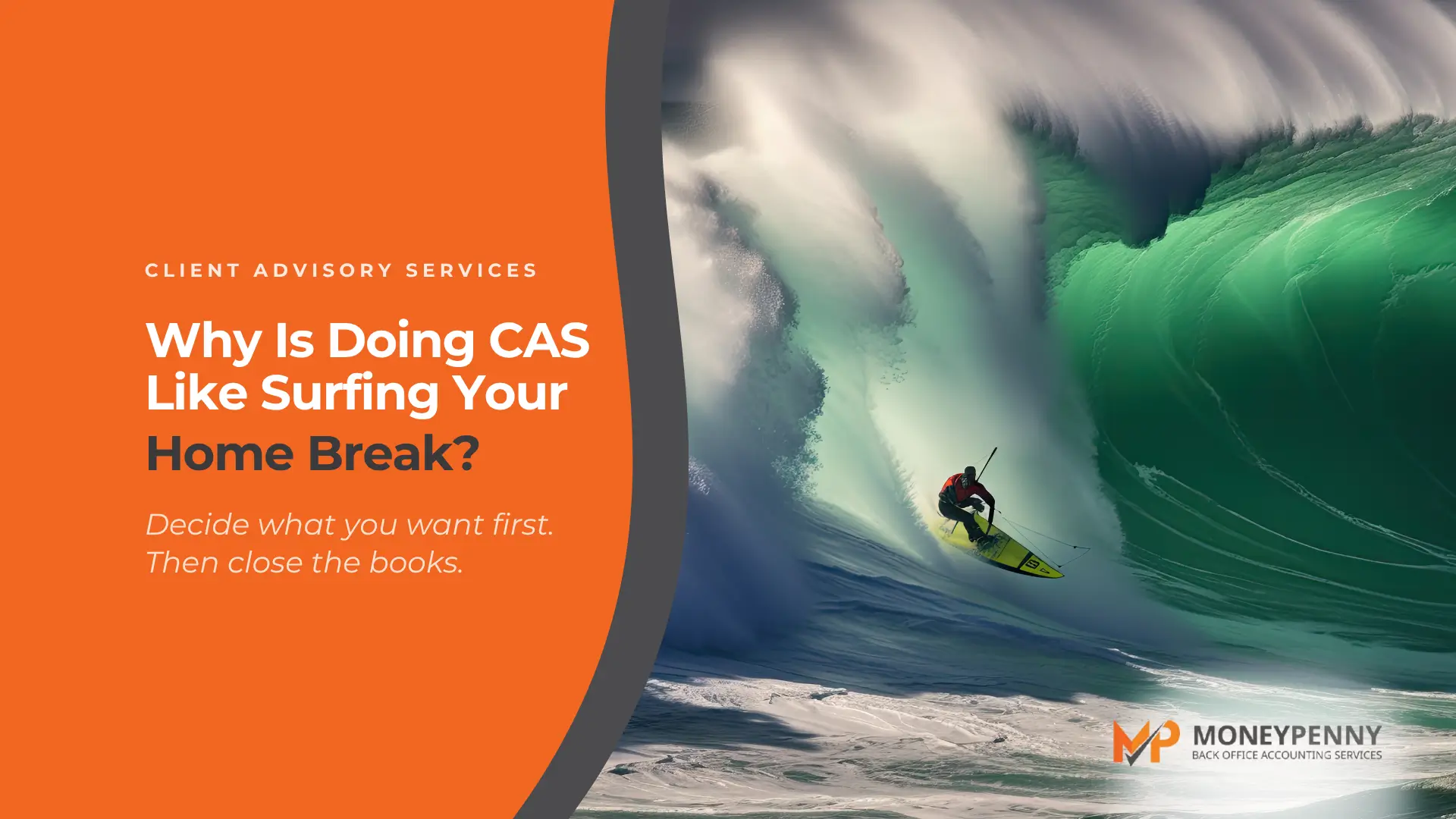
Anyone who has paddled into a wave knows the first rule. You have to want it. The wave does not care how good your board is. If you are not committed and paddling like you want to catch that wave, you back off and watch someone else take the ride.
CAS is the same. Not every firm wants to offer the same advisory work, and that is fine. But you cannot build a team, a process or a tech stack around something you have not defined. So the first question is not “are the books closed?” It is “what do we want to deliver?”
Answer that, and the paddling gets easier. You know which wave you are going for. You know what the close needs to look like to support it. And when you catch it, you feel like you are sitting on top of the world.
Who is paddling with you?
In surfing, you do not drop in on someone who already has the wave. It is the one rule everyone respects.
Except at your home break. There, everyone knows the wave pattern, each other’s ability, each other’s stance. Someone drops in, asks with a nod, weaves in and out, and it becomes a shared ride instead of a collision. The older surfers pass on pointers. Everyone is smiling as they glide to the shore together.
That only works because of trust. Everyone in the water has earned it.
Accounting can work like that too, if you let the trust flow. A team that paddles the same way you do. Clients who are willing to paddle hard alongside you. Technology that lifts you onto the wave instead of dragging behind you. When those three line up, the close stops being the thing that blocks CAS and becomes the thing you can count on.
Where does the close fit?
Before you jump into the deep end of the CAS pool, get clear on what you want to do. It is the first and most important step in becoming your client’s CFO, and everything else builds on it. Then find the people, the clients and the tools that want to catch the same wave.
Paddle out. The water is fine, and the landings are usually soft, even when they take your breath away.
If closing the books is the wave your firm keeps missing, MoneyPenny provides outsourced back office accounting support and CAS support for accounting firms so the advisory work can happen.
For more on building a better accounting practice, MoneyPenny hosts Beyond Numbers, a podcast of practical conversations on capacity, workflow, pricing, technology and the realities of running a firm. Watch on YouTube, or listen on Apple or Spotify.