It happens every year around this time. Tax season is coming into view, and a familiar itch sets in. Maybe this is the year we finally switch workflow tools. Maybe we change the tax software, redo the process, adopt the shiny new app everyone was demoing at the conferences. So the emails go out: what should we move to before January?
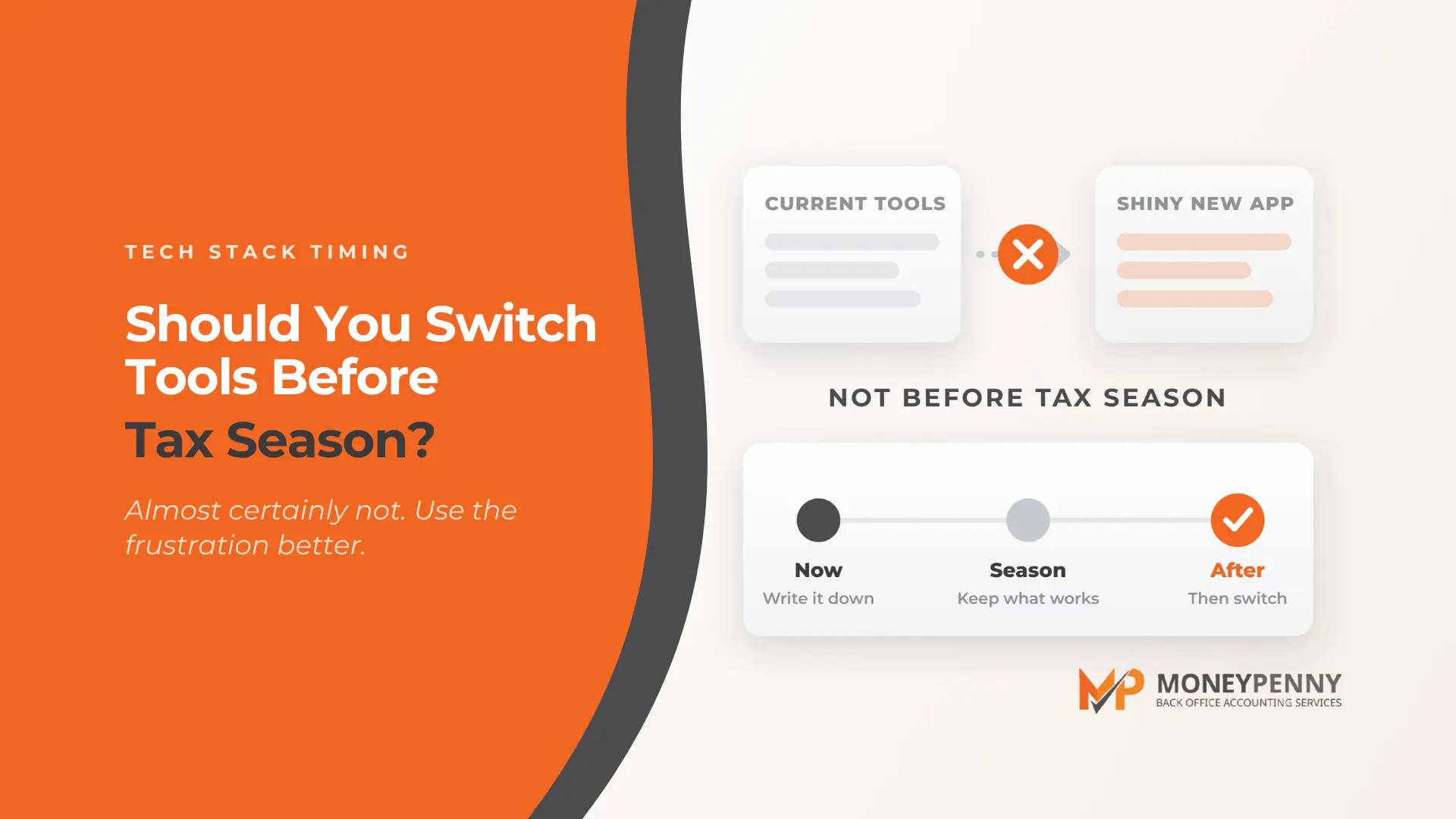
Here is the honest answer almost nobody wants to hear in November (especially the vendors you just met at a fall conference), : do not change it now.
Not because the itch is wrong. The frustration you are feeling is real, and it probably is pointing at something worth fixing. But the weeks right before your busiest season are the worst possible time to fix it. There is a better way to use that frustration, and it costs almost nothing.
Why is November the wrong time to switch?
Think about what you are actually asking of yourself and your team if you introduce a new tool right before the season.
You would be learning a new system, migrating your data, retraining everyone, and ironing out the inevitable early problems, all while the client work is ramping to its heaviest. Selling season, when every vendor is pitching, is not implementation season. A tool dropped in weeks before the rush has no time to be tested, and the frustration of a half-learned system in the middle of the crunch is far worse than the frustration you were trying to escape.
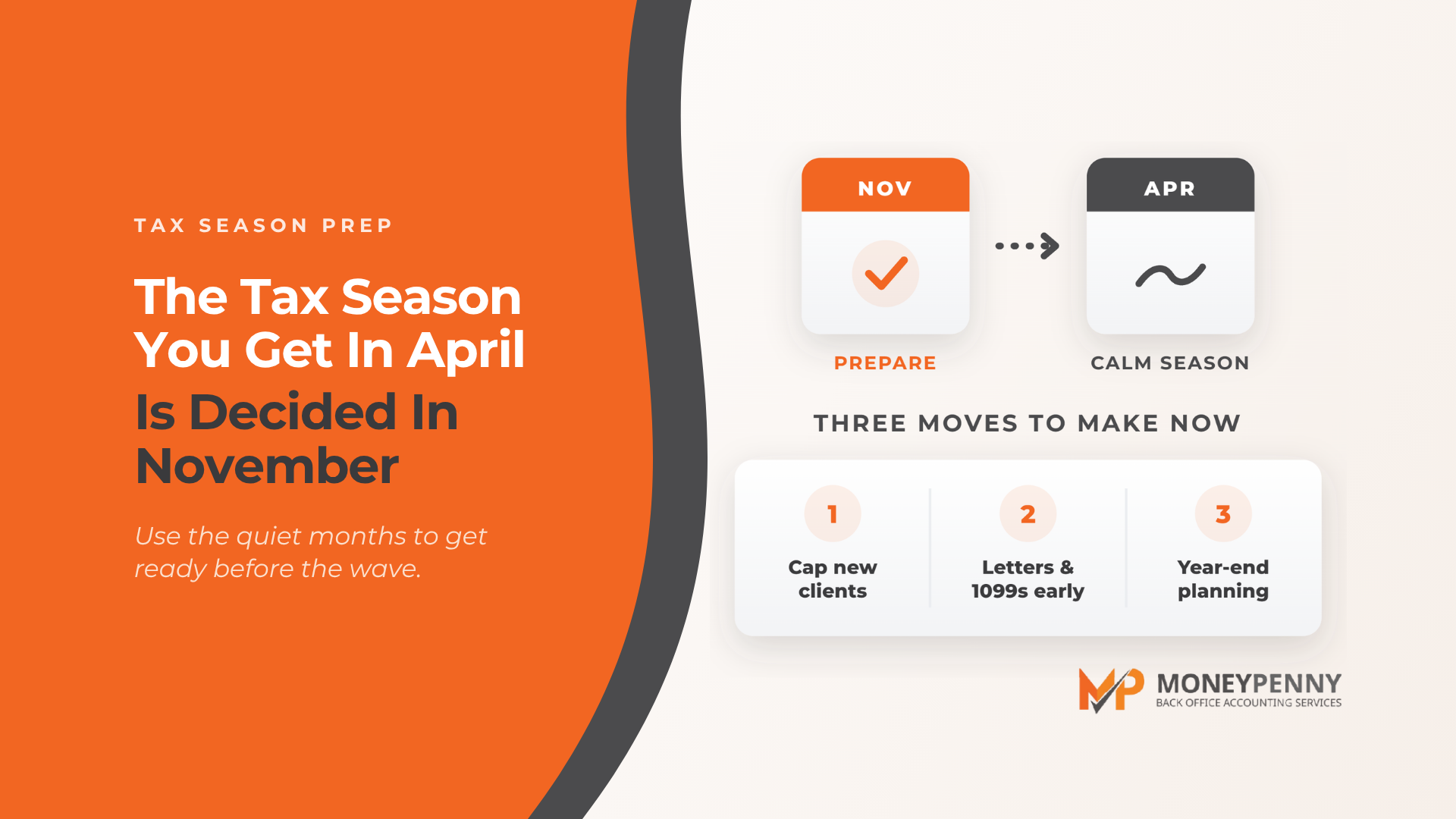
There is a rhythm to a firm’s year, and it leaves only small windows for real change. If you do taxes, or bookkeeping for people who do, you are busy in the winter, busy again around the autumn extensions, with genuine breathing room mostly after April. Trying to jam a tooling change into the pre-season window means doing it in the one stretch you can least afford the disruption.
So what do you do with the frustration?
You capture it. This is the single most useful habit for anyone feeling the pre-season itch, and it turns a bad instinct into a good one.
Get through the season with the tools you have. But every time something frustrates you, the moment you hit it, make a quick note. A line in a document, a thirty-second screen recording, a screenshot, whatever is fastest. Then drop it in a folder called something like “I do not want to do this next year,” and, this part matters, forget about it. Do not let it eat at you. Do not try to solve it now. Log it and move on to the next thing.
By the end of the season you will have something far more valuable than a hunch: a real, specific, evidence-based list of exactly what caused you pain, captured in the moment it actually hurt, not reconstructed from memory in a calmer month when you have half-forgotten the detail.
Capture the specific pain, not just the task
Here is the refinement that makes the folder genuinely useful. Do not just note “I hate doing this task.” Note the exact part that frustrated you.
Often it is not the whole service you dislike. It is one client, or one step, or one specific thing about the tool you are using to deliver it. You might be perfectly happy doing the work, but the way you collect the documents drives you mad, or one particular client’s chaos poisons an otherwise fine process. Writing down the precise point of friction does two things. It tells you whether the problem is the tool, the process, or the client, which are three completely different fixes. And it gives you something concrete to test a solution against later, instead of a vague sense that “something needs to change.”
When do you actually make the change?
You open the folder when the season is over and you have the space to think clearly, around April or May.
That timing is deliberate. When you sit down after the season with your list in hand, you are not guessing anymore. You have a documented set of real frustrations, and you can go into the spring conferences and vendor conversations with a clear question: does this solve something on my list? Instead of being dazzled by every shiny demo, you are matching tools against problems you actually have. And you have the runway, roughly May through to the next busy stretch, to implement properly, train the team, and test it before it matters.
That is the whole method. Feel the itch, capture the specifics, park it, and act on it with evidence when you have the room. It converts a pre-season panic into a calm, prioritised improvement plan.
The bigger question underneath the itch
There is a deeper thing worth naming, because the tool question is often standing in for it. You cannot sensibly choose tools, or people, or services, until you know what you actually want the firm to be.
A lot of firms never step back to ask it. They take whatever comes through the door, adapt to each client’s tools and each client’s workflow, and end up running the work a dozen different ways, thirteen different payroll processes, a yard sale of systems held together by effort. It is rarely bad clients. It is the absence of a decision about what the firm is for, which clients it does its best work with, and what it is willing to say no to. Without that, a firm can grow quickly and still quietly have the life drained out of it.
So while you are building the “not next year” folder, it is worth keeping a second, bigger note going: what do you actually want to be doing? Not the tools, the direction. Because getting the process right first, and knowing what you are building toward, is what makes every later tool decision easy.
For now, though, the move is simple. Do not change your tools in November. Get through the season, capture what hurts, and give yourself the space to fix it properly when the pressure lifts.
Is there anything for the itch in the short term?
Yes. Training. Make the commitment to not change your tools right now, leave that decision to after busy season. Quite often a deeper level of training will help ease some of the pain or frustration you or your team are having.
If it would help to have someone help you decide what is actually worth changing once the season is behind you, that is a conversation we have with firms every spring, and the kind of thing a good back-office team can think through with you.
For more on building a better accounting practice, MoneyPenny hosts Beyond Numbers, a podcast of practical conversations on capacity, workflow, pricing, technology and the realities of running a firm. Watch on YouTube, or listen on Apple or Spotify.