Most firms review their accounting technology at roughly the same point in the year. Tax season is far enough behind you that the pain has stopped being acute, and far enough ahead that a change still feels possible. Renewal dates are approaching. Someone on the team has mentioned, again, that the workflow tool nobody uses is still being paid for.
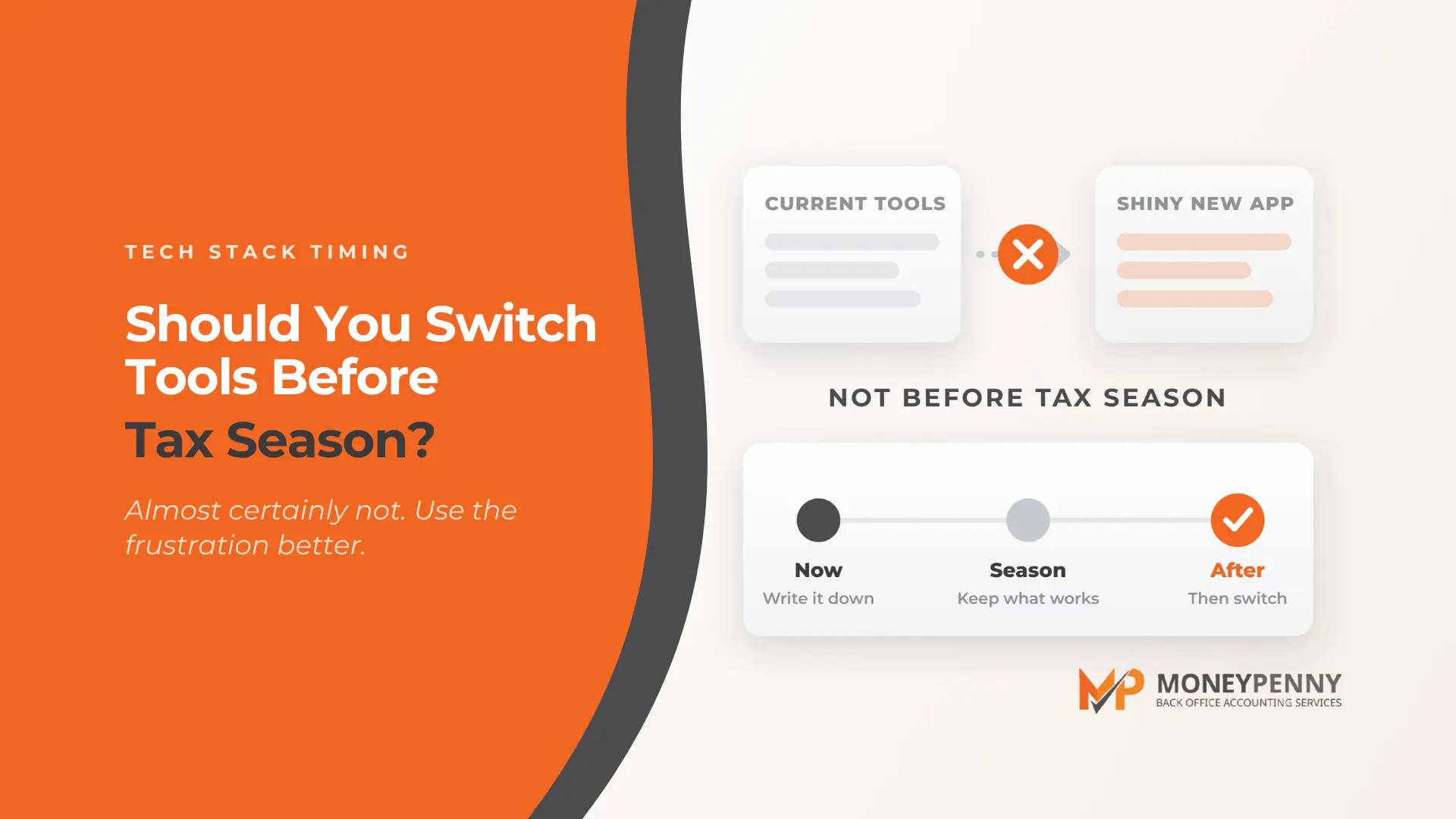
So the review begins. Demos get booked. A spreadsheet appears. And somewhere between the fourth vendor call and the third comparison matrix, the question quietly shifts from “what problem are we solving” to “which product should we buy.”
That shift is where most technology decisions go wrong.
The problem is rarely the product
We work inside more than 300 applications across our clients’ engagements. Practice management systems, tax software, ledger platforms, document tools, payroll, AP, workflow, reporting. We do not sell any of them. We work in them, every day, on real client files, alongside the teams who own them.
That vantage point produces a consistent observation. Firms rarely underperform because they chose the wrong software. They underperform because the software was selected without a clear view of the workflow it was supposed to serve.
A tool that removes effort in one firm adds a new place to check in another. The difference is almost never the product. It is whether the firm understood, before purchase, where work was actually getting stuck.
Two versions of a technology review
There are really two conversations available to a firm at this time of year, and they lead to very different places.
The first is a shopping conversation. What is available, what is new, what are our peers using, what should we buy. This conversation is easy to start and difficult to finish well, because there is always another product.
The second is a diagnostic conversation. Where is work waiting. Which tasks are being performed at a higher skill level than they require. Where is information being entered twice. Which system are people quietly working around. What does the current stack already do that nobody has turned on.
The second conversation is harder. It is also the only one that tells you whether you need a new tool at all.
What we see when we look at a stack
Because our team works inside client systems rather than around them, we tend to notice things that are invisible from the partner’s chair.
We see the practice management system that holds the schedule but not the work, because the work is actually moving through email. We see the document portal that clients bypass by texting photographs to a manager. We see reviewers rebuilding files because “review-ready” means something different to each preparer. We see two systems holding the same client data, kept in sync by someone doing it manually every Friday.
None of these are software problems. All of them get presented as software problems, and a new purchase is usually proposed as the fix.
Getting more from what you already own
The most common outcome of the reviews we participate in is not a purchase. It is better use of what the firm already pays for.
Adoption is where most stacks lose value. Features get licensed and never configured. A module is switched on during implementation, causes friction in week two, and gets abandoned quietly. Nobody documents the decision, so a year later the firm is paying for capability it does not know it has and evaluating a new tool to replace it.
We can help you audit that honestly. What is licensed. What is used. What is used properly. Where the duplicate entry actually sits, and whether an existing integration would remove it. That exercise costs nothing to run and frequently removes the reason for the purchase you were about to make.
When a new tool is the right answer
Sometimes it is. Recurring demand genuinely exceeds capacity. A platform is genuinely at the end of its useful life. An integration genuinely does not exist.
When that is the case, we can tell you how the tools you are considering behave in practice, across firms of a similar shape, with client bases of a similar complexity. Not how they demo. How they hold up in a monthly close, in a busy April, when the data arriving is imperfect and the deadline is fixed.
We can also tell you what implementation will actually require from your team, which is the number most firms underestimate and the one that determines whether the tool ever gets used.
Where MoneyPenny fits
We are a back-office accounting support firm. We handle bookkeeping, payroll, tax preparation, AP, AR, and workflow support inside the systems our clients already use. Technology selection is not a separate product line for us. It is a by-product of doing the work.
That is why we are comfortable telling a firm that it does not need to buy anything.
If you are reviewing your technology this year, we are happy to walk through your current stack with you, look at where the work is genuinely getting stuck, and give you a straight answer about whether new software is the fix or a distraction. You can start that conversation at moneypennyllc.com